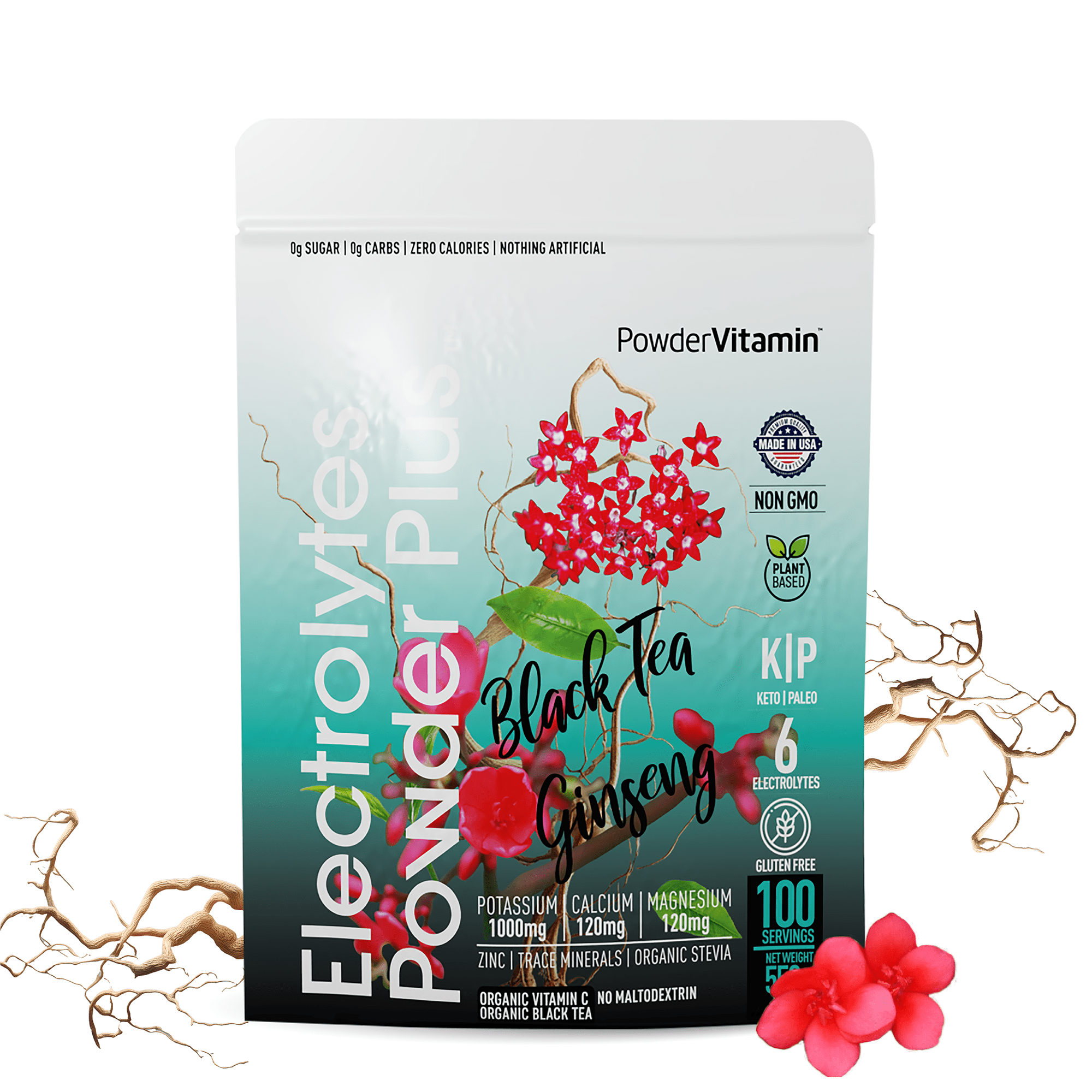
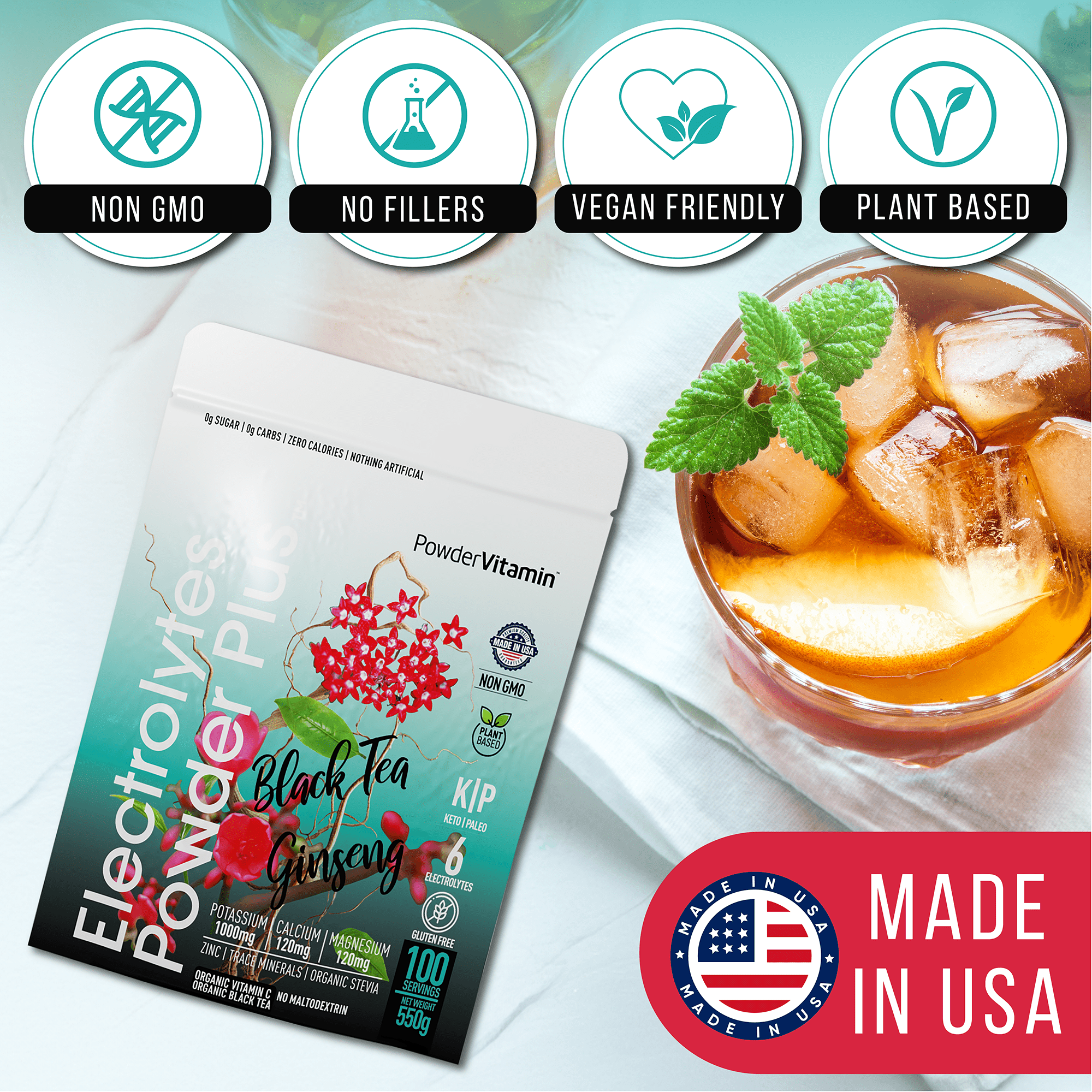
Black Tea Ginseng Electrolytes Powder Plus™ 100 Servings
$36.99 — or Original price was: $36.99.$31.44Current price is: $31.44. / month
Finding the best electrolyte powder for runners can mean the difference between hitting a new PR and bonking halfway through your run feeling like absolute garbage. Running depletes your body’s electrolytes faster than most other activities.
You’re sweating constantly, losing sodium, potassium, and magnesium with every mile, especially on long runs or in hot weather. Plain water isn’t enough once you’re running for more than an hour.
Your body needs those minerals replaced to maintain performance, prevent cramping, and actually absorb the water you’re drinking. Let’s break down exactly what runners need in an electrolyte powder and how to choose one that actually supports your training instead of just adding sugar to your water bottle.
Sweat loss during running is significant. Depending on temperature, humidity, and your personal sweat rate, you can lose 500-2000mg of sodium per hour of running. That sodium loss affects everything, muscle function, nerve signaling, hydration status, and even your ability to maintain pace.
When electrolytes get too low, performance tanks and cramping starts. Water alone can actually make things worse if you’re only replacing fluids without minerals. You dilute the electrolytes remaining in your system, potentially leading to hyponatremia in extreme cases.
Sodium the star player for runners. It’s the primary electrolyte lost in sweat and the most important for maintaining blood volume and preventing cramping during long runs.
Potassium works with sodium to regulate fluid balance and muscle contractions. It’s crucial for preventing fatigue and maintaining your stride mechanics throughout a run.
Magnesium supports muscle relaxation and energy production. Low magnesium contributes to cramping, especially in your calves and hamstrings during or after runs.
Running depletes electrolytes faster than most activities. Between the constant sweat, extended duration, and physical demands, runners need formulas that do more than just replace minerals. These tea-based options combine hydration with performance-enhancing ingredients specifically beneficial for distance and endurance.
This is the powerhouse option for serious runners. The combination of black tea caffeine and ginseng creates the perfect pre-run or during-run fuel.
Check out Black Tea Ginseng Electrolytes Powder Plus
The lighter option that still packs performance benefits. Green tea provides gentler energy while ginseng supports your running goals.
Check out Organic Green Tea Ginseng Electrolytes Powder
Training tip: Many runners keep both on hand. Use the Black Tea Ginseng Plus for hard workout days, tempo runs, and races. Save the Green Tea Ginseng for easy runs, recovery days, and when you’re running twice a day.
Both formulas support what runners actually need: electrolyte replacement from sweating, sustained energy for distance, adaptogenic support for training stress, and mental focus for pushing through tough miles. The 100-serving containers mean you’re not constantly reordering, which is clutch when you’re in the middle of heavy training blocks.
Runner’s reminder: Start using these 30 to 45 minutes before your run, or mix one up to sip during runs over 90 minutes. Your body absorbs them quickly, but giving them a head start means the benefits kick in right when you need them most.
The best electrolyte powder for runners typically contains 300-500mg of sodium per serving. Some performance formulas go even higher for serious distance runners or heavy sweaters. Compare this to standard sports drinks that often have only 100-200mg per serving.
That’s not enough for runners going more than an hour, especially in challenging conditions. If you’re a salty sweater, you know who you are if you get white crusty marks on your clothes or hat, you need the higher end of this range or even more.
Runs under an hour don’t really need carbs in your electrolyte drink. You have enough stored glycogen for shorter efforts, and adding sugar just means extra calories. Longer runs benefit from some carbs in your electrolyte mix.
About 30-60 grams per hour of running helps maintain energy and actually improves electrolyte absorption. The type of sugar matters too. Glucose is absorbed fastest, while fructose can cause stomach issues for some runners.
A blend of both often works well without overwhelming your gut.
Clean, simple ingredients are best. You want actual electrolyte minerals, not a bunch of fillers, artificial colors, or mystery “proprietary blends” that hide what’s really in there.
Avoid excessive caffeine in electrolyte powders. A little bit is fine for morning runs, but too much combined with exercise can actually increase dehydration and cause jitters.
Natural flavoring and coloring . Preferable if you’re consuming this stuff regularly. Your body doesn’t need artificial dyes and chemicals when you’re trying to perform at your best.
Pre-run hydration starts the night before for long runs. Having electrolytes with your evening meal helps you start properly hydrated rather than playing catch-up. During runs, start drinking your electrolyte mix early, within the first 15-20 minutes.
Don’t wait until you feel thirsty or tired, because by then you’re already behind. Post-run recovery benefits from continued electrolyte intake. Your body is still losing fluids through sweat even after you stop running, and you need to replace what was lost.
Summer running increases electrolyte needs dramatically. What works in cool weather might leave you cramping in 85-degree heat with high humidity. Double your usual electrolyte intake on hot days.
Seriously, your sweat rate can double or triple, and your electrolyte consumption needs to match that increase. Pre-loading with extra sodium before hot runs helps maintain blood volume. Some runners drink extra electrolytes 30-60 minutes before heading out in serious heat.
Practice your race day nutrition during training runs. Never try a new electrolyte powder on race day, your gut needs to adapt to whatever formula you choose. Carry extra electrolyte packets for longer races.
Aid stations might only have water or inadequate sports drinks that don’t meet your needs. Set alarms or reminders to drink regularly during races. It’s easy to get caught up in racing and forget to consume electrolytes until it’s too late.
Muscle cramping during or after runs is the obvious signal. If you’re cramping regularly, you’re not getting enough sodium and possibly magnesium. Dizziness or lightheadedness during runs indicates potential electrolyte imbalance.
Your blood volume might be dropping because you’re not replacing sodium losses. Excessive fatigue that seems disproportionate to your effort level can stem from electrolyte depletion. Your muscles literally can’t function properly without adequate minerals.
Cold water improves taste significantly; most electrolyte powders taste better and are more refreshing when mixed with ice-cold water rather than room temperature.
Use a shaker bottle with a mixing ball. This prevents clumps and ensures even distribution of the powder throughout your drink.
Mix fresh before each run rather than preparing bottles hours in advance. Some formulas can separate or change flavor if they sit too long.
Citrus flavors tend to be most refreshing during hard efforts. Lemon, lime, and orange cut through that cotton-mouth feeling better than sweeter flavors. Avoid overly sweet options for long runs.
What tastes good at the start can become nauseating by mile 15 when your stomach is already working hard. Unflavored powder gives you flexibility. Mix it into juice, add it to water with a splash of lemon, or even add it to recovery smoothies post-run.
Calculate cost per serving, not per container. A $40 tub with 60 servings is cheaper than a $20 tub with 20 servings, do the math before buying. Buying in bulk saves money if you run regularly.
Most runners training for marathons or half-marathons go through electrolyte powder quickly. Quality matters more than price for race day, but for daily training, mid-range options often work perfectly fine. Save the premium stuff for races and long runs.
Start with lower concentrations and build up. If a full serving causes stomach distress, try half servings more frequently throughout your run. Some runners tolerate certain sweeteners better than others.
Stevia, sucralose, and sugar alcohols affect people differently, experiment during training to find what works. Taking electrolytes with a small amount of food can help sensitive stomachs. A few bites of banana or a piece of toast can buffer the powder.
Easy runs under an hour might not need extra electrolytes. Plain water works fine for recovery runs and short easy efforts. Tempo runs, intervals, and speed work increase sweat rate significantly.
Even if these workouts are shorter, the intensity means you need electrolyte replacement. Long runs always benefit from electrolytes regardless of pace. Time on feet matters more than intensity for electrolyte depletion during distance running.
Ultra distances require different strategies. You’ll need more sodium than typical formulas provide, sometimes 500-1000mg per hour or more. Salt tablets combined with regular electrolyte powder work for many ultra runners.
This lets you consume extra sodium without drinking excessive liquid. Variety helps on ultra-long efforts. Alternating between flavors or mixing electrolyte drinks with other nutrition prevents flavor fatigue over 6+ hours.
Continuing electrolyte intake after running speeds recovery. Your body needs 30-60 minutes post-run to fully rehydrate, not just the time you spend drinking.
Electrolytes help reduce next-day muscle soreness. Proper mineral balance supports the recovery processes your muscles undergo after hard efforts.
Better sleep quality often follows when you properly replace electrolytes. Mineral imbalances can disrupt sleep, making recovery harder than it needs to be.
Keep powder in a cool, dry place away from moisture. Bathrooms are terrible storage spots because of humidity from showers. Seal containers tightly after each use. Exposure to air can cause clumping and reduce the effectiveness of active ingredients over time.
Most electrolyte powders last 12-24 months unopened. Once opened, use within 6 months for best taste and potency.
Consider getting a sweat test if you’re serious about performance. Knowing your exact sodium loss rate helps you dial in the perfect electrolyte strategy. DIY sweat testing involves weighing yourself before and after runs.
Weight loss primarily reflects fluid loss, which correlates with electrolyte loss. Pay attention to how you feel with different amounts. Your body gives feedback, use it to adjust your intake rather than blindly following package directions.

Electrolyte powder works well alongside most running supplements. It doesn’t interfere with caffeine, BCAAs, or other common running supplements. Avoid doubling up on the same minerals.
If you take a separate magnesium supplement, account for that when choosing your electrolyte powder. Timing matters when combining supplements. Space out different products so your body can process everything properly without overwhelming your system.
Drinking too much plain water while running dilutes the electrolytes you do have. Always add electrolytes to your water during runs over 60 minutes.
Starting electrolyte intake too late in your run means playing catch-up. Begin drinking your mix early rather than waiting until you feel depleted.
Using the same concentration year-round doesn’t account for seasonal changes. Adjust your intake based on weather and your sweat rate variations.
Start with recommended serving sizes and adjust based on how you feel. Every runner is different, and what works for others might not work perfectly for you.
Keep notes about what you use during good runs versus bad runs patterns that help you refine your electrolyte strategy over time.
Finding the best electrolyte powder for runners involves testing different options during training to discover what supports your performance, prevents cramping, and helps you feel strong through every mile.
For runs over an hour, aim for 300-500mg of sodium per hour as a baseline. Adjust upward if you’re a heavy sweater or running in hot weather, and downward for cooler conditions. Start drinking your electrolyte mix within the first 15-20 minutes and continue every 15-20 minutes throughout your run.
For marathons and longer races, some runners need up to 1000mg of sodium per hour.
Short easy runs under an hour don’t really need electrolyte powder, plain water works fine. Save it for runs over 60 minutes, hard workouts, hot weather conditions, or any run where you know you’ll sweat significantly.
Using it for every run isn’t harmful, but it’s unnecessary and adds cost. Reserve electrolyte powder for when your body actually needs the extra mineral replacement.
Electrolyte powders designed for runners typically contain 2-3 times more sodium than bottled sports drinks. They’re also customizable, you control the concentration and can adjust based on conditions.
Many powders skip excessive sugars and artificial ingredients that regular sports drinks include. The best electrolyte powder for runners prioritizes sodium content and clean ingredients over sweetness and marketing.
Yes, having electrolytes before morning runs helps compensate for overnight dehydration. Drink 8-12 ounces of water with electrolytes 30-60 minutes before heading out. This pre-loads your system and ensures you start properly hydrated.
For easy runs, this might be all you need. For long runs, continue consuming electrolytes during your run as well.
Excessive sodium intake can cause bloating, increased thirst, and in extreme cases, elevated blood pressure. However, this is rare for runners who sweat regularly. Your kidneys efficiently process extra sodium during and after runs.
The bigger risk is too little sodium during long runs, which causes cramping and performance issues. Stick to recommended amounts and adjust based on your sweat rate and how you feel.

No account yet?
Create an Account