
Black Tea Ginseng Electrolytes Powder Plus™ 100 Servings
$36.99 — or Original price was: $36.99.$31.44Current price is: $31.44. / month
If you’re wondering if mushroom coffee has caffeine, the short answer is yes, but probably less than you’re used to getting from your regular morning cup. Mushroom coffee has been gaining serious traction in the wellness world, and for good reason.
But there’s a lot of confusion about what you’re actually getting in each cup, especially when it comes to the caffeine content. Some people assume mushroom coffee is caffeine-free because it’s marketed as a healthier alternative.
Others think it has the same kick as regular coffee but with added benefits. The truth is somewhere in between, and understanding exactly what you’re drinking matters if you’re trying to manage your caffeine intake or figure out if mushroom coffee fits your daily routine.
Most mushroom coffee contains about 50-70 milligrams of caffeine per cup. For context, a typical cup of regular coffee has around 95-200 milligrams depending on how it’s brewed and how strong you make it.
This means mushroom coffee generally has about half the caffeine of traditional coffee. You’re still getting a caffeine boost, just a gentler one that’s less likely to cause jitters or anxiety. The exact amount varies by brand and blend.
Some companies use more coffee beans relative to mushroom powder, while others go lighter on the coffee and heavier on the mushrooms.
The reduced caffeine isn’t some special extraction process, it’s simple math. When you blend coffee with mushroom powder, the mushroom takes up space that would otherwise be filled with coffee grounds.
If half your blend is mushroom extract and half is coffee, you’re naturally getting about half the caffeine. The mushrooms themselves contain zero caffeine, so they dilute the overall caffeine concentration.
This is actually one of the main selling points for many people. You get the energy and alertness from caffeine without consuming amounts that might disrupt sleep or cause unpleasant side effects.
The caffeine experience in mushroom coffee tends to feel smoother than regular coffee. People often describe it as more sustained energy without the sharp spike and crash pattern. This isn’t just a placebo effect or marketing talk.
The medicinal mushrooms contain compounds that work synergistically with caffeine, potentially modulating how your body processes and responds to it. Adaptogens in mushrooms like reishi help balance your stress response, which might reduce the anxious feeling some people get from caffeine alone. You’re getting stimulation with built-in balance.
A cup of black tea contains about 40-70 milligrams of caffeine, pretty similar to mushroom coffee. Green tea sits around 25-50 milligrams, making it lower than most mushroom coffee blends. Energy drinks can pack anywhere from 80 to 300 milligrams per serving.
Mushroom coffee offers significantly less caffeine than most energy drinks while still providing a noticeable lift. Espresso shots contain roughly 63 milligrams per ounce, so a double shot has more caffeine than a cup of mushroom coffee.
If you’re trying to cut back on caffeine, mushroom coffee is a reasonable middle ground.
Yes, some brands make completely caffeine-free mushroom drinks. These use only mushroom extracts without any actual coffee, though they often include other ingredients to mimic coffee flavor.
These caffeine-free versions won’t give you that morning energy boost, but they still provide the functional benefits of medicinal mushrooms. They’re great for evening drinking or for people who need to avoid caffeine entirely.
Just check the label carefully, “mushroom coffee” usually means it contains some caffeine from real coffee, while “mushroom elixir” or “mushroom drink” might be caffeine-free.
The coffee-to-mushroom ratio is the biggest factor. Blends with more coffee and less mushroom will have higher caffeine content, while mushroom-heavy blends contain less. The type of coffee bean matters too.
Robusta beans contain about twice the caffeine of Arabica beans. Most specialty mushroom coffees use Arabica for better flavor, which also means less caffeine. The brewing method and serving size affect your final caffeine intake.
A larger cup means more caffeine, and stronger brewing extracts more caffeine from whatever coffee is in the blend.
People sensitive to caffeine can finally enjoy a morning coffee ritual without feeling awful afterward. If regular coffee makes you shaky, anxious, or keeps you up at night, mushroom coffee might work better.
Afternoon coffee drinkers benefit because the lower caffeine is less likely to interfere with sleep. You can have a cup at 2 PM without worrying about tossing and turning at midnight.
Anyone trying to reduce caffeine intake gradually can use mushroom coffee as a step-down approach. It’s easier than going cold turkey and still gives you some of that familiar coffee experience.
Individual caffeine sensitivity varies wildly. Some people metabolize caffeine quickly and can drink it all day, while others feel effects for hours from a small amount. If you’re someone who gets jittery from a single cup of regular coffee, mushroom coffee’s 50-70mg might still be too much.
You might need to start with half a serving or look for lower-caffeine options. Pay attention to how you feel 30 minutes and 3 hours after drinking mushroom coffee. That tells you whether the caffeine level works for your body.
Morning consumption works well for most people. The moderate caffeine provides a gentle wake-up without overwhelming your system first thing. Pre-workout timing can enhance exercise performance.
The combination of caffeine and cordyceps mushrooms supports both mental focus and physical energy during workouts. Avoid drinking mushroom coffee within 6 hours of bedtime if you’re sensitive to caffeine.
Even though it has less than regular coffee, it can still disrupt sleep for some people.
Lion’s mane, chaga, reishi, and cordyceps, the most common mushrooms in these blends, contain absolutely no caffeine on their own. All caffeine comes from the coffee portion of the blend.
The mushrooms contribute their own unique compounds and benefits, but stimulation isn’t one of them. In fact, reishi is actually calming, which is why it balances out the caffeine’s stimulating effects.
This means you could theoretically make mushroom coffee with any amount of caffeine by adjusting the coffee-to-mushroom ratio. The mushrooms themselves don’t add or subtract caffeine.
Always check the nutrition facts panel for specific caffeine content. Reputable brands list this clearly per serving, so you know exactly what you’re getting.
Serving size matters when comparing products. One brand’s “serving” might be one teaspoon while another uses two teaspoons, changing the caffeine math.
Look for third-party testing certifications. These indicate the company actually measures what’s in their product rather than just guessing or estimating caffeine levels.
If you drink mushroom coffee and then have tea or regular coffee later, you’re stacking caffeine. Add up your total daily intake to avoid consuming too much without realizing it. The FDA considers 400mg of caffeine daily safe for most healthy adults.
With mushroom coffee at 50-70mg per cup, you could theoretically have 5-6 cups and stay under that limit. However, everyone’s tolerance differs. Just because something is technically safe doesn’t mean it’s optimal for you personally.
Switching from regular coffee to mushroom coffee can help minimize caffeine withdrawal symptoms. You’re cutting intake roughly in half rather than quitting completely. Expect mild headaches for a few days if you’re coming from high caffeine consumption.
This is normal and passes quickly as your body adjusts to lower amounts. Some people do a gradual transition, mixing regular coffee with mushroom coffee initially, then slowly increasing the mushroom coffee ratio over a week or two.
Pregnant women are often advised to limit caffeine to 200mg per day or less. Mushroom coffee’s lower caffeine content makes it easier to stay within those guidelines. However, the medicinal mushrooms themselves haven’t been extensively studied during pregnancy.
Many doctors recommend avoiding them entirely during pregnancy and breastfeeding out of caution. Always discuss any dietary changes with your healthcare provider if you’re pregnant, nursing, or trying to conceive. Individual circumstances matter more than general advice.
Not necessarily. Caffeine provides energy and focus, but the mushrooms contribute their own cognitive and physical benefits that aren’t caffeine-related. Lion’s mane supports brain function independently of caffeine.
Cordyceps enhances cellular energy production through different mechanisms than stimulation. Many people find mushroom coffee more effective overall despite lower caffeine because the combination of ingredients works together better than caffeine alone.
You can control caffeine content by making your own blend at home. Mix mushroom powder with regular or decaf coffee in whatever ratio suits your needs. Using decaf coffee with mushroom powder creates an ultra-low-caffeine option.
You’ll get about 2-5mg from the decaf plus all the mushroom benefits. This DIY approach lets you experiment until you find your perfect caffeine sweet spot. Start with a 50/50 blend and adjust from there.
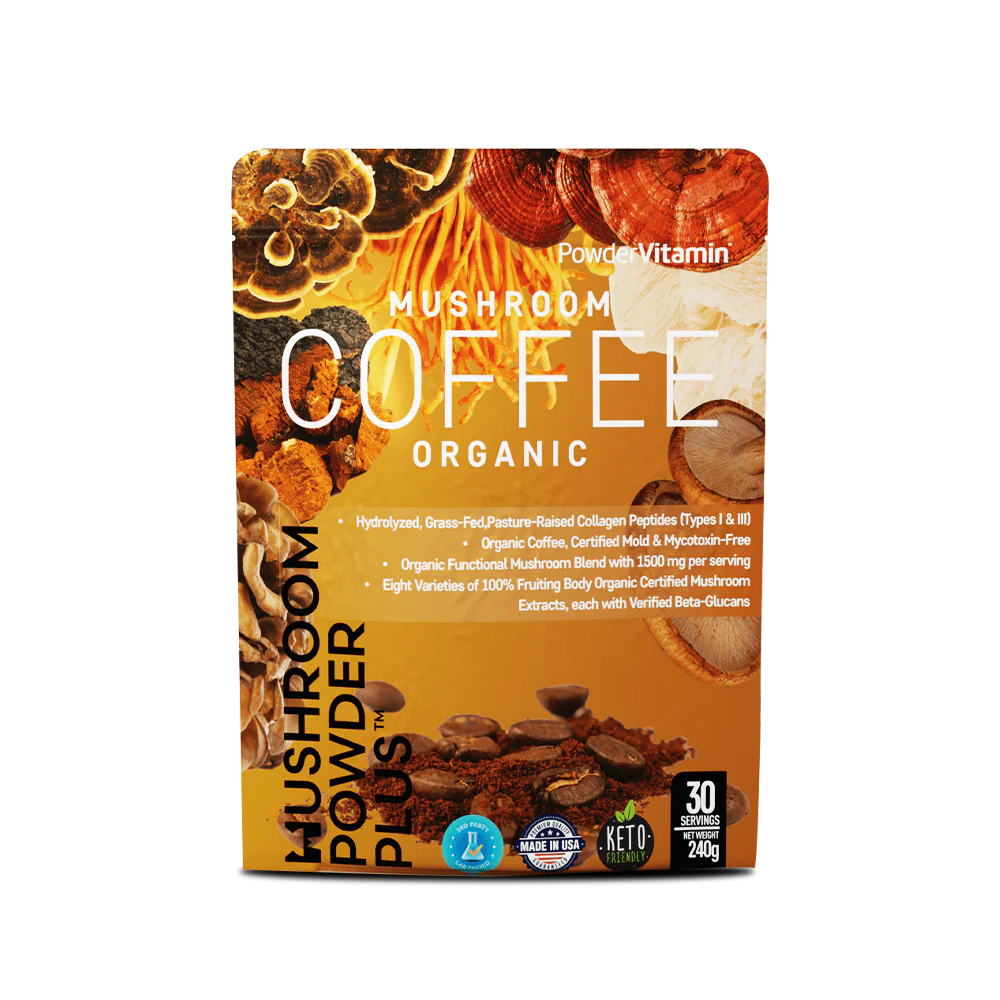
If you’re looking for a mushroom coffee with transparent caffeine content and quality ingredients, PowderVitamin’s Mushroom Powder Plus deserves consideration. Our 30-serving collection addresses many of the caffeine concerns discussed throughout this article.
PowderVitamin’s coffee blend contains 80% less caffeine than typical coffee, putting it on the lower end of the mushroom coffee spectrum. This makes it particularly suitable if you’re highly caffeine-sensitive or trying to significantly reduce your intake while maintaining a coffee routine.
The lower caffeine content comes from our light roast, low-acid coffee extract blended with eight functional mushrooms: Lion’s Mane, Cordyceps, Turkey Tail, Chaga, Reishi, Shiitake, Maitake, and Tremella. This comprehensive mushroom profile means you’re getting substantial functional benefits even with the reduced caffeine.
What’s particularly relevant for caffeine management is that we clearly list our caffeine content and uses 100% fruiting body mushrooms rather than mycelium. This transparency helps you accurately track your daily caffeine intake, which matters if you’re combining mushroom coffee with other caffeinated beverages.
The blend also includes grass-fed collagen, adding joint and skin support benefits that aren’t caffeine-related. This means you’re getting value from ingredients beyond just the caffeine kick.
For those timing their caffeine intake carefully, the gentler stimulation from PowderVitamin’s lower-caffeine formula makes it more forgivable for afternoon consumption. While you should still avoid it too close to bedtime, the reduced caffeine gives you more flexibility than regular coffee.
The products are certified pesticide-free and tested for molds and mycotoxins, which matters because quality control affects not just mushroom potency but also how consistently the caffeine content matches the label claims.
At around $25 for 30 servings, you’re paying less than $1 per cup for a product that helps you manage caffeine intake while still providing energy and focus support.
Mushroom coffee isn’t a stimulant-free herbal coffee substitute, it contains real coffee with real caffeine. Just less than you might be used to. The mushrooms don’t “cancel out” caffeine effects. They modulate and balance them, but the caffeine is still active in your system.
You can’t drink unlimited mushroom coffee just because it has less caffeine. Even moderate amounts add up if you’re having multiple cups throughout the day.
Keep a simple log for a week noting how much mushroom coffee you drink and how you feel. Energy levels, sleep quality, and any jitters or anxiety are worth tracking. Adjust your intake based on actual results, not marketing claims or what works for other people.
Your body’s response is the only thing that really matters. If you’re not getting enough energy, you might need to increase the amount or switch to a higher-caffeine blend. If you’re feeling wired, cut back or choose a mushroom-heavier formula.
Switching to mushroom coffee long-term naturally reduces your overall caffeine intake. Over months and years, this can mean better sleep, less dependence on caffeine, and fewer tolerance issues.
Some people cycle their caffeine intake, having regular coffee sometimes and mushroom coffee other times. This prevents building tolerance while maintaining flexibility. There’s no single right answer for everyone.
The best approach depends on your lifestyle, sensitivity, goals, and how coffee fits into your daily routine. Understanding whether mushroom coffee has caffeine and exactly how much helps you make informed decisions about whether it fits your energy needs and health goals.
Yes, mushroom coffee can interfere with sleep if consumed too close to bedtime, especially if you’re caffeine-sensitive. Even though it contains less caffeine than regular coffee, 50-70mg is still enough to affect sleep for some people. Avoid drinking it within 6-8 hours of bedtime to be safe. If you want evening mushroom drinks, look for completely caffeine-free mushroom elixirs instead.
Most experts don’t recommend mushroom coffee for children due to both the caffeine content and the medicinal mushroom extracts. Kids are more sensitive to caffeine, and there’s limited research on how medicinal mushrooms affect developing bodies. If you want to share mushroom benefits with children, consult a pediatrician about age-appropriate caffeine-free mushroom supplements designed specifically for kids.
You can build caffeine tolerance to any caffeinated beverage, including mushroom coffee. However, because the caffeine content is lower, tolerance develops more slowly than with regular coffee. The medicinal mushrooms themselves don’t create tolerance the same way caffeine does. Some people find they need less mushroom coffee over time rather than more, possibly due to the cumulative benefits of the mushrooms.
This depends entirely on your specific medications. The caffeine in mushroom coffee can interact with certain drugs, and some mushrooms have blood-thinning properties or affect immune function. Always discuss any new food or supplement, including functional mushroom products, with your doctor or pharmacist if you take prescription medications. Don’t assume “natural” automatically means safe to combine.
Decaf mushroom coffee uses decaffeinated coffee beans mixed with mushroom powder, resulting in only trace amounts of caffeine (typically 2-5mg per cup). It provides all the mushroom benefits without significant stimulation. Some people drink regular mushroom coffee in the morning and switch to decaf versions later in the day to extend mushroom benefits without increasing caffeine intake. Check labels to confirm actual caffeine content per serving.
No account yet?
Create an Account