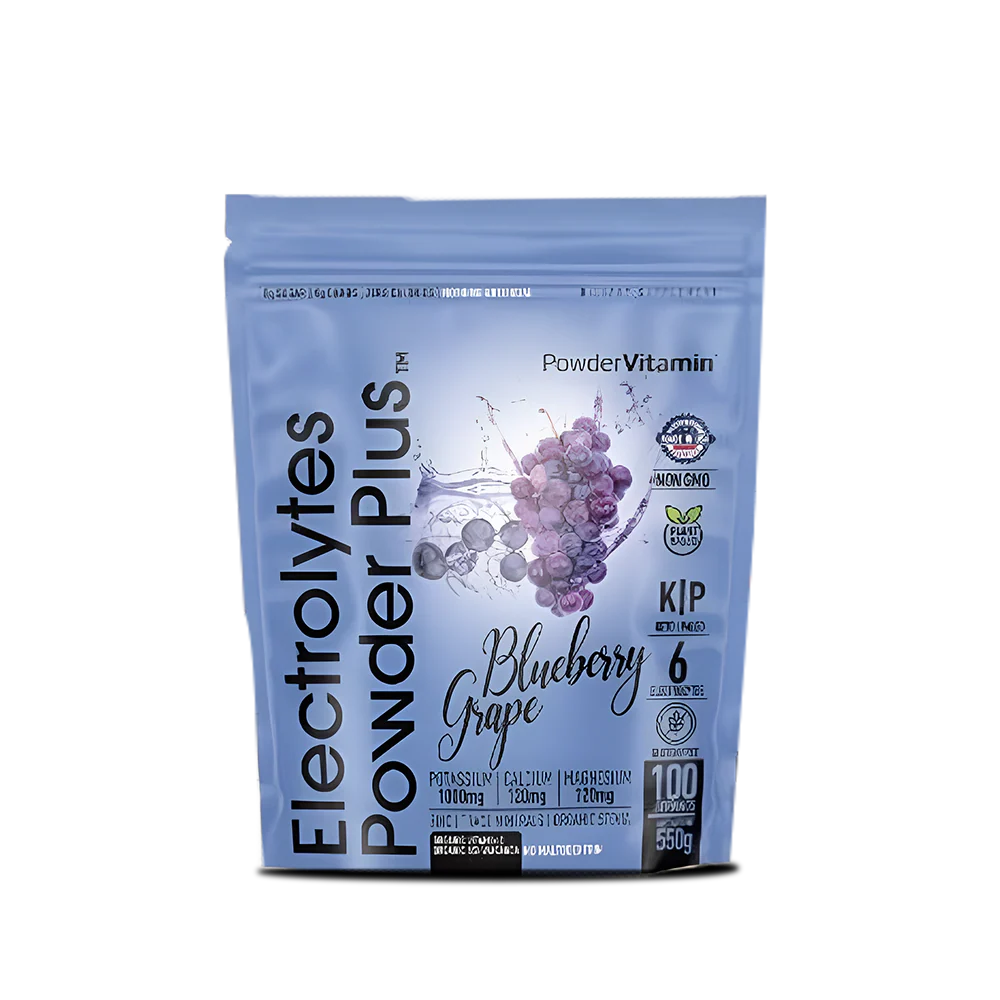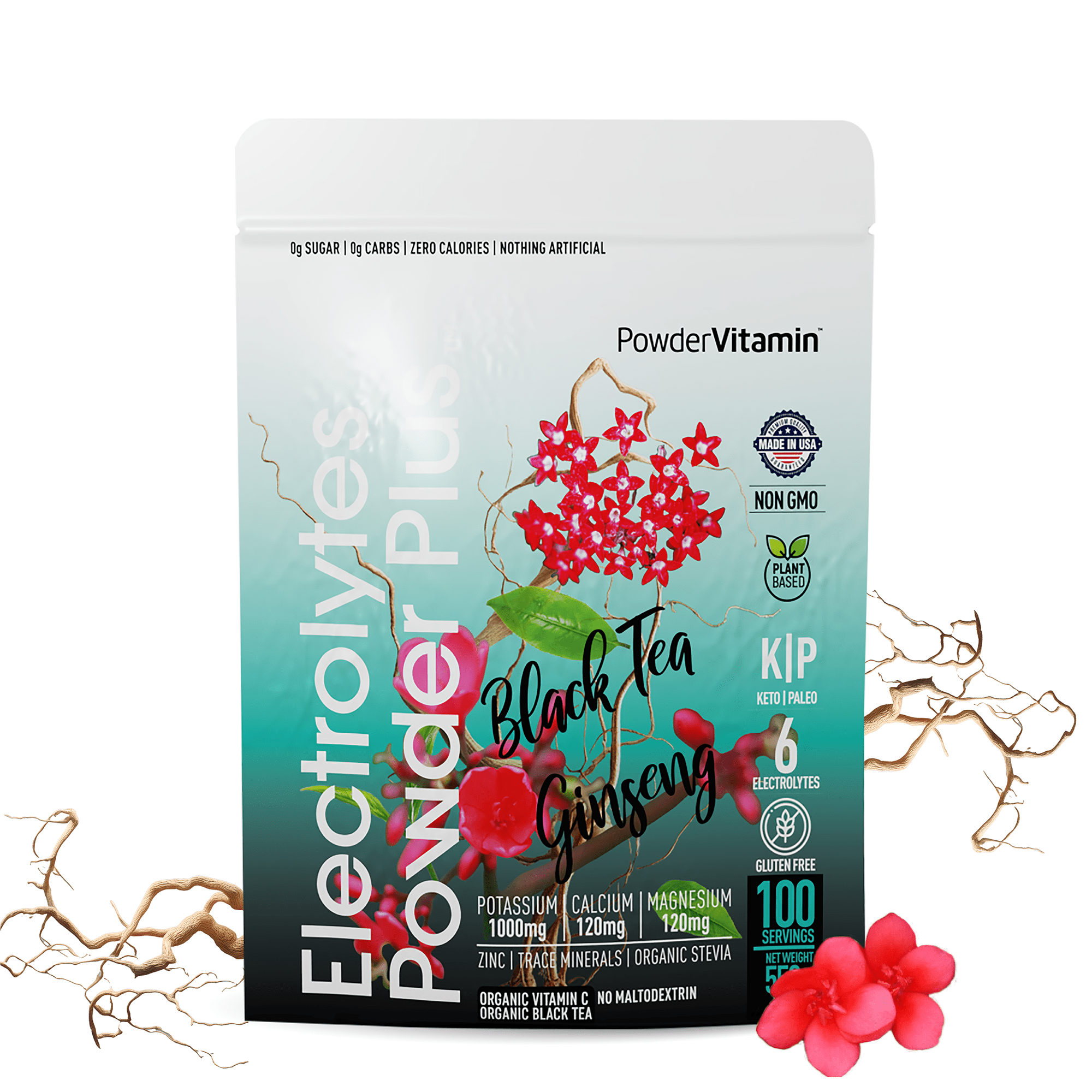
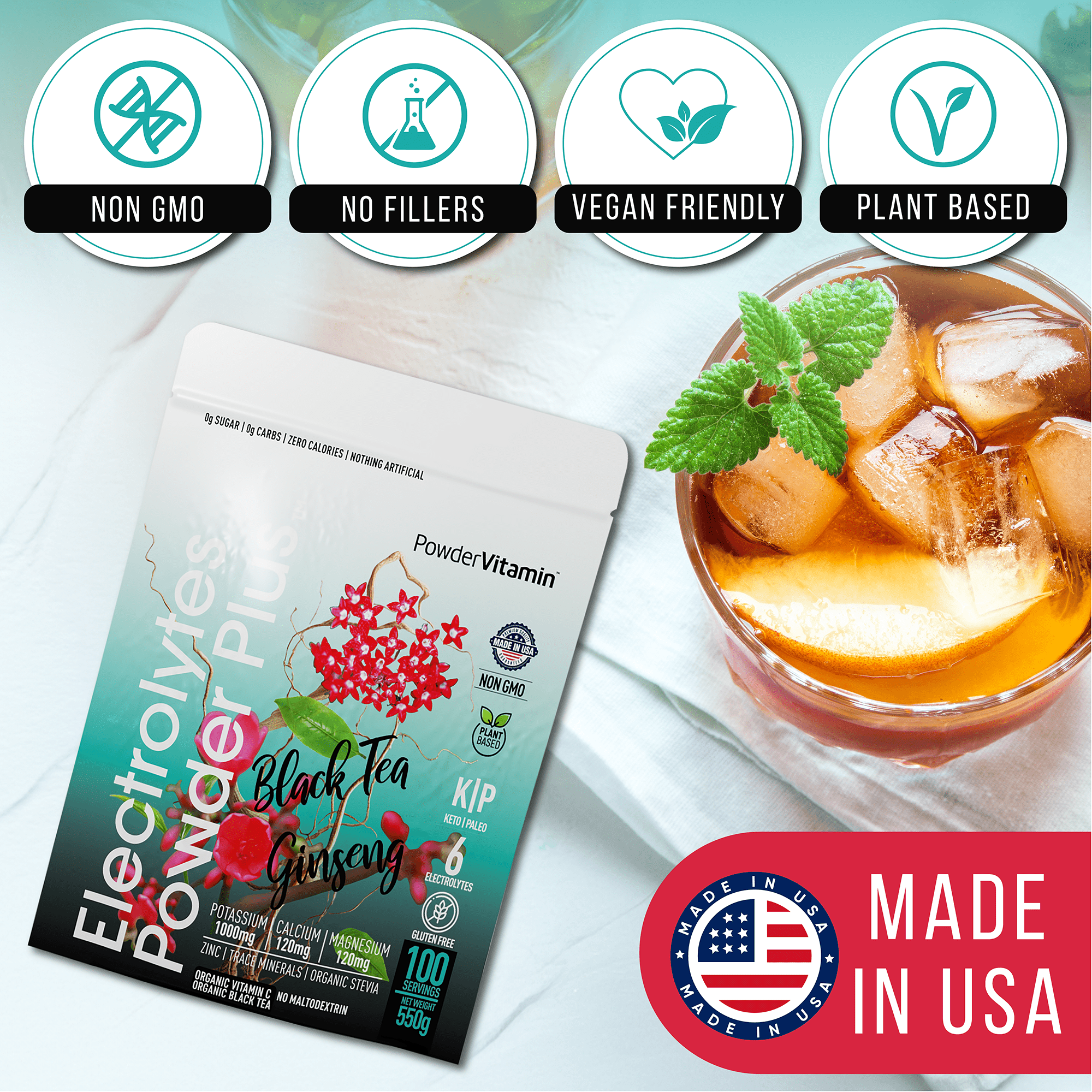
Black Tea Ginseng Electrolytes Powder Plus™ 100 Servings
$36.99 — or Original price was: $36.99.$31.44Current price is: $31.44. / month
Confused about when you actually need hydration drink powder versus when plain water is perfectly fine for staying hydrated throughout your day?
The hydration powder market has exploded with products claiming to hydrate you faster, better, and more completely than regular water. Some of these claims have merit while others are pure marketing exaggeration.
The truth is that hydration drink powder serves specific purposes and genuinely helps in certain situations, but it’s not necessary or even beneficial for every glass of water you drink.
Understanding how these powders actually work in your body, when they provide real advantages, and how to use them strategically helps you stay optimally hydrated without wasting money on products you don’t need.
Hydration drink powder provides minerals that activate specific absorption pathways in your intestines. These pathways pull water from your digestive tract into your bloodstream more efficiently than plain water alone.
Sodium is the star player in this process. It triggers cotransport mechanisms that actively move water across intestinal walls rather than relying on passive diffusion.
Your cells need proper mineral balance to function. Water alone can’t maintain this balance, especially when you’re losing minerals through sweat, stress, or normal metabolic processes.
The powder creates a solution that mimics your body’s natural fluid composition. This allows faster movement across cell membranes and better retention of fluids within your system.
Sodium regulates fluid balance and drives water absorption in your gut. Effective hydration drink powder contains at least 200 to 500 milligrams per serving. Potassium maintains cellular hydration and works alongside sodium. Look for 150 to 400 milligrams to support proper fluid distribution between cells and bloodstream.
Magnesium supports hundreds of enzyme reactions including energy production. Quality formulas include 30 to 100 milligrams of easily absorbed magnesium forms. Calcium contributes to muscle contractions and nerve signaling. While less critical than the big three, 20 to 50 milligrams rounds out complete mineral profiles.
Chloride partners with sodium to maintain acid-base balance. This often comes naturally as sodium chloride or gets listed separately.
Sitting at your desk in air conditioning drinking water occasionally works fine with plain water. Light activity in comfortable conditions rarely depletes minerals enough to need supplementation. Exercise lasting over 45 minutes to an hour changes the equation. You’re losing significant minerals through sweat that plain water can’t replace.
Hot weather or high humidity increases sweat rate dramatically. Even without intense exercise, heat exposure creates mineral losses requiring replacement. Illness with fever, vomiting, or diarrhea depletes both fluids and electrolytes rapidly. Hydration drink powder supports recovery better than water alone.
Alcohol consumption causes dehydration and mineral imbalance. Using hydration powder before bed or the next morning helps recovery significantly.
Your body loses about one to two pounds of water overnight through breathing and minor sweating. This represents genuine dehydration that affects morning function. Drinking 12 to 16 ounces with hydration drink powder within 30 minutes of waking jumpstarts your day. You’ll feel more alert and energized than with plain water or coffee alone.
Morning mineral replacement supports better cognitive function. Your brain needs proper hydration and mineral balance to work optimally from the start. This sets a positive hydration pattern for the entire day. Starting well-hydrated makes maintaining status easier than playing catch-up all day.
Pre-workout hydration 30 to 60 minutes before activity prepares your system. Starting properly hydrated with adequate minerals improves performance compared to plain water. During exercise, sipping hydration drink powder every 15 to 20 minutes maintains status. Aim for 4 to 8 ounces depending on sweat rate and intensity.
Post-workout recovery benefits from continued mineral replacement. Your body keeps losing fluids after you stop, and minerals support the repair process. The difference in performance and recovery is measurable. Studies show properly hydrated athletes perform better and recover faster than those drinking only plain water.
Airplane cabins create severe dehydration through extremely dry air. Humidity levels often drop below 20 percent, drier than most deserts. Drinking hydration drink powder before, during, and after flights prevents arrival exhaustion. The minerals help your body hold onto fluids despite harsh conditions.
Time zone changes disrupt normal hydration regulation. Your body’s natural rhythms get confused, making proper mineral balance even more important. Different climates require adjustment periods. Moving from cool, humid environments to hot, dry ones increases hydration needs that powder helps meet.
Persistent fatigue despite adequate sleep suggests chronic dehydration. If water alone isn’t helping, minerals might be the missing piece. Frequent muscle cramps, especially during or after activity, indicate mineral imbalance. Sodium, potassium, and magnesium deficiency all contribute to cramping.
Headaches, particularly afternoon ones, often stem from dehydration. Adding minerals to your water helps prevent these better than water alone. Dark yellow urine that doesn’t lighten despite drinking water means poor absorption. The minerals in hydration powder help your body actually use the water.
Excessive thirst even after drinking plenty suggests electrolyte imbalance. Water keeps passing through without proper mineral support for retention.
Most people benefit from one to two servings daily depending on activity and environment. Sedentary desk workers might need just one morning serving. Active individuals or those in challenging environments need more. Two to three servings spread throughout the day supports higher demands.
Very intense training or extreme conditions might require even more. Ultra-endurance athletes or outdoor workers in heat sometimes need four or more servings. Listen to your body rather than following rigid rules. Thirst, energy levels, and urine color provide feedback about whether you’re using enough.
Follow package directions as a starting point for water amounts. Manufacturers test specific concentrations for optimal absorption and taste. Too concentrated creates hypertonic solutions that can slow absorption. Your gut struggles to process overly strong mixtures efficiently.
Too diluted wastes product and reduces effectiveness. The mineral concentration drops below useful levels for enhanced hydration. Adjust based on personal preference within reason. Some people prefer slightly stronger or weaker, but don’t deviate too far from recommendations.
Spread intake across the day rather than consuming all at once. Your body can only absorb so much at one time, making steady intake more effective. Morning, mid-afternoon, and post-exercise represent ideal timing. These match natural low points in hydration status or times of increased need.
Avoid drinking large amounts right before bed. While evening hydration is fine, excessive fluids late disrupt sleep with bathroom trips. Set reminders if you tend to forget. Consistent timing builds habits that ensure you actually use the powder regularly.
Hydration drink powder works fine with or without food. The minerals absorb independently of digestive processes happening with meals. Some people prefer it between meals on an empty stomach. This allows focus on hydration without competing with food digestion.
Others like it with meals as their beverage. This works perfectly well and simplifies routine by combining drinking with eating times. Avoid replacing all meal beverages with hydration powder. Plain water with some meals keeps variety and prevents excessive mineral intake.
Hangovers respond remarkably well to hydration drink powder. The mineral replacement helps your body recover from alcohol’s dehydrating effects. Illness recovery, especially with digestive issues, benefits from gentle mineral replacement. Small frequent sips support healing better than forcing plain water.
Jet lag reduction happens partly through better hydration. The minerals help your body adjust to new time zones more smoothly. Heat exposure whether from weather or hot work environments demands aggressive hydration. Plain water alone can’t keep up with mineral losses.

Basic hydration formulas focus on core minerals without extras. These work perfectly for everyday hydration support at lower cost. Performance blends include higher sodium and sometimes carbohydrates. Athletes during intense training need these more robust formulas.
Recovery-focused options add magnesium, sometimes amino acids or vitamins. These target post-exercise repair and adaptation. Immunity blends incorporate vitamins C and D, zinc, and other immune supporters. These serve dual purposes during cold and flu season.
Keep hydration drink powder in cool, dry locations away from humidity. Moisture causes clumping and can degrade ingredients over time. Seal containers tightly after every use. Even brief air exposure introduces moisture that affects powder quality.
Most powders last 12 to 24 months unopened. Once opened, use within three to six months for optimal freshness and potency. Mix servings fresh rather than preparing large batches. Solutions maintain best taste and effectiveness when consumed within hours of mixing.
Calculate cost per serving for true comparison. Container prices mislead without knowing how many servings you actually get. Bulk purchasing reduces per-serving costs significantly. Larger containers or multi-month supplies offer better value for regular users.
Subscription services provide 15 to 25 percent discounts typically. Automatic delivery ensures you never run out while saving money. Generic or store brands sometimes match premium formulas. Compare actual mineral amounts rather than assuming expensive means better.
Third-party testing verifies purity and potency. Independent lab certification ensures you’re getting what the label claims. Clear labeling with specific mineral amounts shows transparency. Vague “proprietary blends” hide information you need to evaluate effectiveness.
Minimal unnecessary ingredients indicates focus on core function. Simple formulas often work better than complex blends with dozens of additions. Positive reviews mentioning specific benefits provide real-world validation. Consistent feedback about energy, performance, or reduced cramping indicates effectiveness.
Using too little powder in too much water dilutes below effectiveness. Follow directions rather than making it super weak. Waiting until you’re dehydrated or cramping means playing catch-up. Proactive hydration throughout the day works better than reactive consumption.
Assuming all products work the same leads to poor choices. Quality, mineral content, and formulation vary dramatically between brands. Replacing all water with hydration powder creates unnecessary expense. Strategic use for specific situations provides better value than constant use.
Kids can use hydration drink powder but need smaller amounts. Half servings or pediatric formulas work better than full adult doses. Pregnant women benefit from proper hydration but should consult doctors. Mineral needs change during pregnancy, requiring professional guidance.
Older adults often have diminished thirst sensation. Scheduled hydration drink powder helps maintain status when natural signals fail. People with medical conditions affecting fluid balance need medical oversight. Kidney disease, heart failure, and some medications require careful hydration management.
Urine color provides simple assessment. Pale yellow indicates good hydration while dark yellow suggests need for more fluids and minerals. Energy levels throughout the day reflect hydration status. Consistent alertness without afternoon crashes suggests adequate hydration.
Performance during activities shows whether your strategy works. Maintaining strength and endurance indicates proper mineral and fluid balance. Recovery speed between workouts or stressful days demonstrates effectiveness. Faster bounce-back suggests your hydration approach is working.
Hydration drink powder complements but doesn’t replace healthy active lifestyle. Sleep, nutrition, movement, and stress management still matter enormously. Use it strategically as one tool in your wellness toolkit. Combined with other healthy habits, it contributes to overall vitality.
Consistency matters more than perfection. Regular use during appropriate situations provides cumulative benefits over time. Adjust based on seasonal changes and life circumstances. Your needs shift with weather, activity levels, and life stressors.
Finding quality hydration and wellness supplements from trustworthy sources makes achieving health goals easier. Powder Vitamin offers science-backed formulations designed to deliver real results through proper ingredient selection and effective dosing.
The powder-based supplement category provides convenient, effective modern hydration solutions and nutrition needs across diverse lifestyles.
Using hydration drink powder strategically during exercise, travel, illness, hot weather, and mornings provides genuine benefits beyond plain water, while understanding when water alone suffices prevents unnecessary expense and ensures optimal hydration for your specific needs.
Yes, using hydration drink powder daily is safe and beneficial for most healthy adults. One to two servings per day supports optimal hydration without excessive mineral intake. Many people make it part of their morning routine or use it around workouts consistently.
Just follow recommended serving sizes and don’t replace all your water intake with powder. People with kidney issues or high blood pressure should consult doctors before regular use due to sodium content.
Hydration drink powder typically offers better value and more control than bottled sports drinks. You adjust concentration, avoid unnecessary packaging, and usually get more minerals per serving.
Powder lets you choose formulas without excessive sugar or artificial ingredients common in commercial drinks. The main advantage of bottled drinks is convenience when you can’t mix powder. For regular use, powder wins on cost, effectiveness, and customization.
Use hydration drink powder during exercise over 45 minutes, in hot weather, after alcohol consumption, during illness, for morning hydration, and during travel. Plain water works fine for light activity in comfortable conditions when you’re not sweating heavily.
If you’re losing minerals through sweat or other means, powder helps replace what’s lost. For sedentary office days in air conditioning, plain water suffices for most people.
Yes, hydration drink powder can significantly reduce muscle cramps caused by electrolyte imbalance. Sodium, potassium, and magnesium all support proper muscle function, and deficiency in any causes cramping.
If you regularly cramp during or after exercise, inadequate electrolyte replacement is likely the cause. Using powder consistently before, during, and after activity helps maintain mineral balance that prevents cramping better than plain water alone.
You should start feeling better within 15 to 30 minutes of drinking hydration powder. The minerals absorb quickly, especially sodium, which immediately improves water absorption. Initial improvements include reduced thirst, better mental clarity, and decreased fatigue.
Full rehydration takes 45 to 90 minutes depending on how dehydrated you were initially. If you don’t notice any difference within an hour, you might not have been significantly dehydrated or the formula may lack adequate sodium.
No account yet?
Create an Account