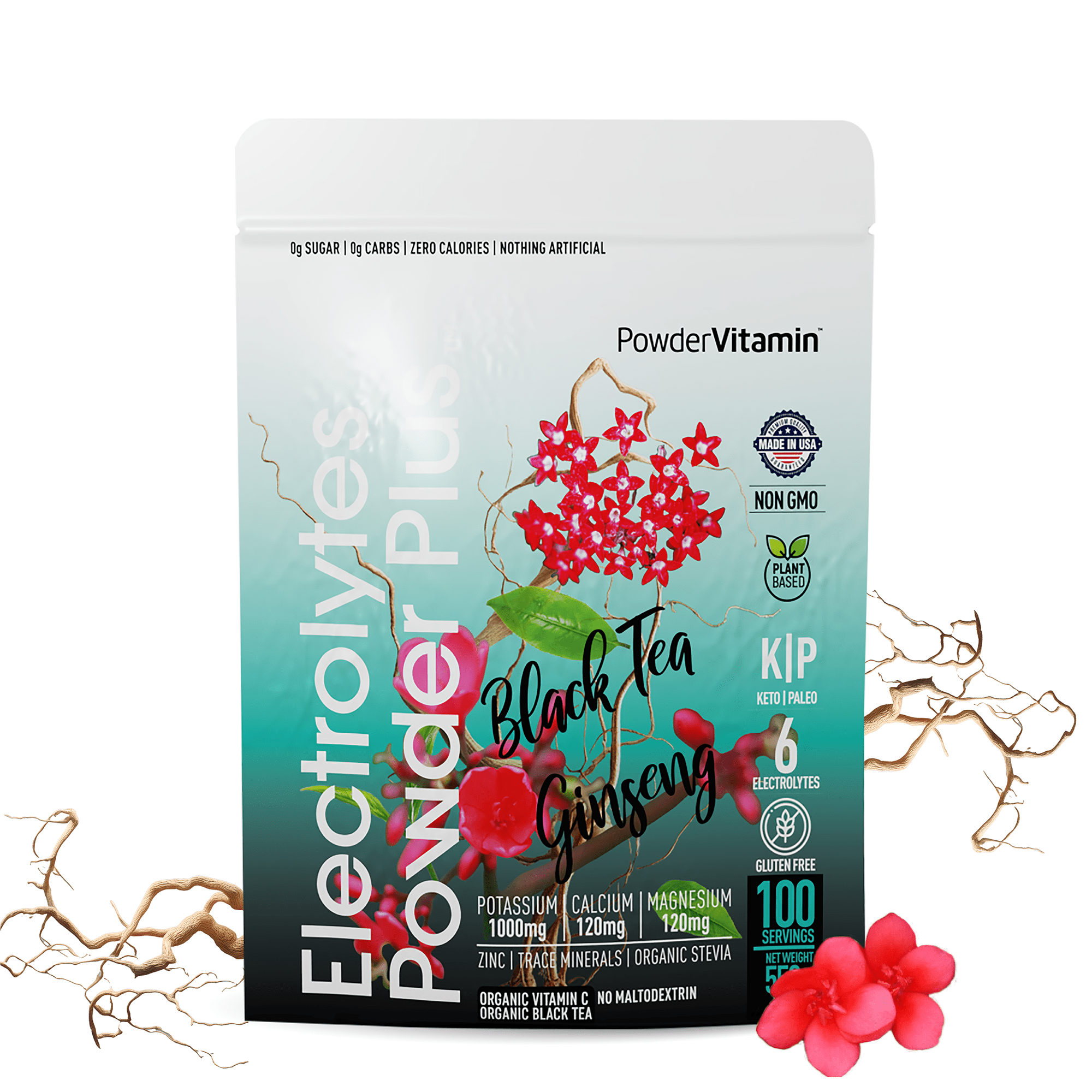
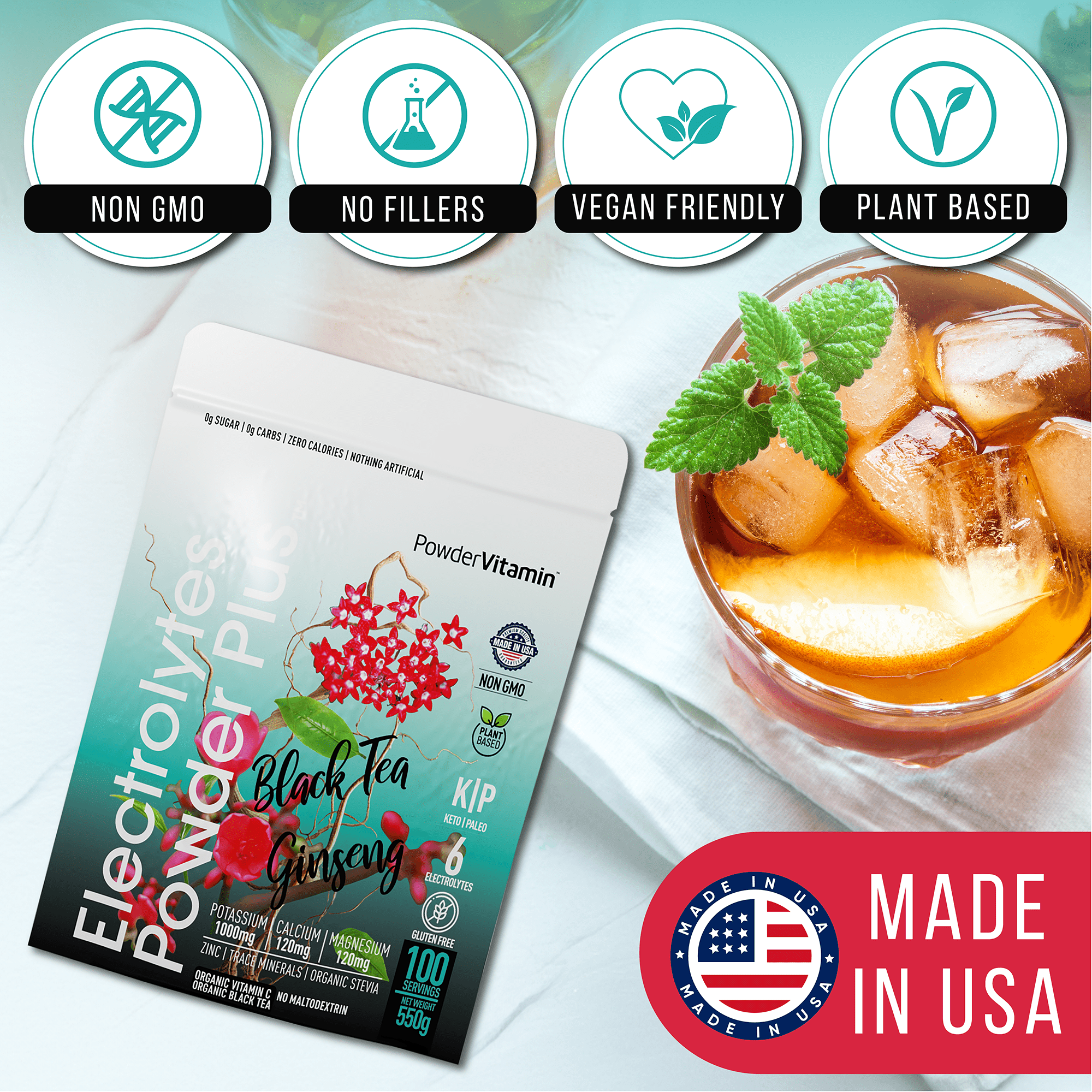
Black Tea Ginseng Electrolytes Powder Plus™ 100 Servings
$36.99 — or Original price was: $36.99.$31.44Current price is: $31.44. / month
Searching for sugar free electrolyte powder that actually hydrates effectively without compromising on taste or leaving you with weird artificial aftertastes?
Most electrolyte drinks and powders are loaded with 15 to 25 grams of sugar per serving. While that sugar can help with hydration during intense exercise, it’s completely unnecessary for everyday hydration and adds empty calories most people don’t need.
The challenge is finding sugar-free options that still taste good, work effectively, and use quality sweeteners rather than questionable artificial chemicals.
Understanding what makes sugar-free electrolyte powder effective, which sweeteners work best, and how to choose quality options helps you stay hydrated without the blood sugar rollercoaster or unwanted calories.
Blood sugar management is the primary reason most people seek sugar-free electrolyte powder. Avoiding sugar spikes and crashes helps maintain steady energy throughout the day.Calorie reduction matters for weight management goals. Eliminating 60 to 100 calories per serving from sugar adds up quickly when you drink electrolytes daily.
Dental health benefits from avoiding sugar exposure. Frequent sugar consumption, especially in liquid form, contributes to tooth decay and enamel erosion. Metabolic health improves with reduced sugar intake. Less sugar means better insulin sensitivity and reduced risk of metabolic syndrome over time.
Many people simply feel better without sugar. The energy from proper hydration feels cleaner without the interference of blood sugar fluctuations.
Electrolyte absorption doesn’t absolutely require sugar contrary to popular belief. While small amounts of glucose can enhance sodium absorption speed, it’s not essential for hydration.Sodium remains the key driver of hydration regardless of sugar presence. The minerals do the actual work of helping your body absorb and retain water effectively.
Sugar-free formulas work perfectly for everyday hydration needs. You only potentially need sugar during intense exercise lasting over 90 minutes when you need quick carbohydrate fuel.
The cotransport mechanism that pairs sodium with glucose provides faster absorption, but the difference is minimal for casual hydration. Sugar-free options absorb plenty fast for most situations.
Stevia comes from plant leaves and provides zero-calorie sweetness. Quality stevia extracts taste clean without the metallic aftertaste that cheaper versions sometimes have. Monk fruit offers another plant-based zero-calorie option. Many people find monk fruit tastes sweeter and cleaner than stevia with less potential for aftertaste.
Erythritol is a sugar alcohol that tastes very similar to sugar. It provides bulk and mouthfeel along with sweetness without calories or blood sugar impact. Allulose is a rare sugar that tastes identical to regular sugar but isn’t absorbed. Your body processes it differently, providing sweetness without metabolic effects.
Combinations of sweeteners often taste better than single sources. Blending stevia with erythritol or monk fruit creates more balanced, sugar-like sweetness.
Sucralose remains one of the most common artificial sweeteners in sugar free electrolyte powder. It’s heat-stable, very sweet, and extensively studied for safety. Aspartame appears in some formulations though less commonly now. Some people report sensitivities while others tolerate it perfectly fine.
Acesulfame potassium often appears combined with other sweeteners. It enhances sweetness perception when paired with sucralose or other options. The safety debate around artificial sweeteners continues. Current research generally supports their safety at normal consumption levels, but some people prefer avoiding them on principle.
Personal tolerance varies dramatically. What tastes great and causes no issues for one person might taste terrible or cause digestive upset for another.
Sugar-free doesn’t mean low-sodium, and that’s actually good. Effective hydration requires adequate sodium, typically 200 to 500 milligrams per serving minimum.Some sugar-free formulas compensate for lack of sugar with higher sodium. This actually improves hydration effectiveness since sodium drives water absorption.
Don’t choose based on lowest sodium content. More sodium usually means better hydration, especially during activity or hot weather.Check the actual milligram amount rather than percentage of daily value. Daily value percentages can be misleading for assessing hydration effectiveness.
Quality sugar free electrolyte powder includes meaningful amounts of potassium. Look for 150 to 400 milligrams to complement sodium’s effects. Magnesium supports muscle function and reduces cramping. Effective formulas contain 30 to 100 milligrams of easily absorbed magnesium forms.
The ratio between minerals matters as much as individual amounts. Sodium should lead with potassium and magnesium providing balanced support.Calcium appears in some formulas as a bonus mineral. While beneficial, it’s less critical than the big three for hydration purposes.
Sugar-free electrolyte powder tastes different from sugar-sweetened versions. The sweetness feels cleaner and less syrupy without the heavy mouthfeel sugar creates. Some people prefer the lighter taste profile. Without sugar coating everything, you actually taste the electrolytes and natural flavors more clearly.
Quality matters enormously for palatability. Premium sugar-free formulas using good sweeteners taste pleasant while cheap versions can be undrinkably artificial.
Flavor intensity is often stronger in sugar-free versions. Manufacturers compensate for lack of sugar by using more pronounced fruit or citrus flavors.
Citrus flavors work exceptionally well sugar-free. Lemon, lime, orange, and grapefruit taste refreshing and natural without needing sugar to balance acidity. Berry flavors succeed when using quality natural flavoring. Strawberry, raspberry, and mixed berry can taste great or artificial depending on formula quality.
Tropical options like pineapple or mango need careful formulation. These flavors can taste weird without sugar but work beautifully when done right. Unflavored sugar-free options provide maximum flexibility. Mix them into any beverage without flavor conflicts or sweetener taste at all.
Sugar alcohols like erythritol can cause digestive issues in some people. Large amounts may lead to bloating, gas, or loose stools, especially initially. Start with smaller servings to assess tolerance. Many people adapt to sugar alcohols over a week or two of regular consumption.
Stevia and monk fruit generally cause fewer digestive problems. These don’t ferment in your gut the way sugar alcohols potentially can. Individual sensitivity varies wildly. What bothers one person might be perfectly fine for another, requiring personal experimentation.
Stay hydrated when using sugar-free electrolyte powder. Adequate water intake helps prevent any potential digestive discomfort from sweeteners.
Morning hydration works perfectly with sugar-free options. You’re replenishing overnight losses without adding unnecessary morning sugar and calories. Throughout the workday, sugar-free formulas provide ongoing hydration support. Keep a bottle at your desk without worrying about sugar intake.
Light to moderate exercise benefits from sugar-free electrolytes. Unless you’re doing intense training over 90 minutes, sugar isn’t necessary. Post-workout recovery can use sugar-free formulas effectively. The electrolytes support recovery without the sugar that might interfere with fat burning.
Evening hydration avoids sugar that could disrupt sleep. Sugar-free options let you hydrate before bed without blood sugar interference.
Intense endurance exercise over 90 minutes benefits from some carbohydrates. The quick energy helps maintain performance when glycogen depletes. Ultra-distance events or competitions might warrant sugar-containing formulas. The combined hydration and fuel serves dual purposes during extreme efforts.
Hypoglycemia or blood sugar crashes need quick sugar. In these medical situations, sugar serves a therapeutic purpose beyond just hydration. Personal preference matters if you genuinely prefer the taste. Some people simply enjoy sweetened versions more despite no functional need for sugar.
Most everyday situations work perfectly well sugar-free. Reserve sugar-containing electrolytes for specific high-intensity or ultra-endurance applications.
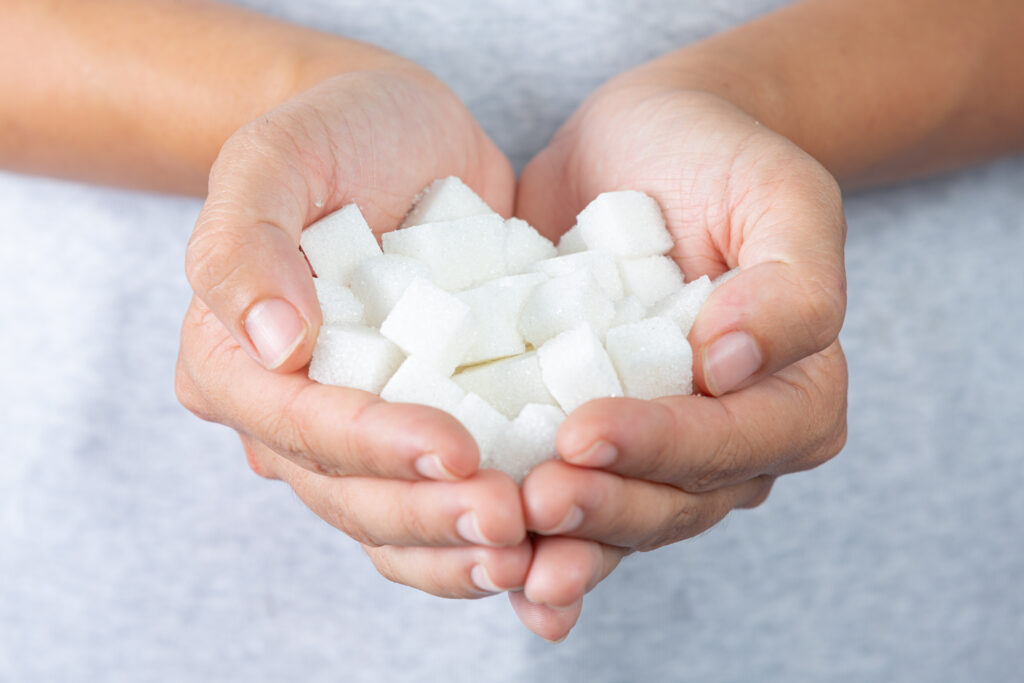
Check serving size first because it affects all other numbers. Some products use tiny serving sizes to make numbers look better. Sugar content should be zero or very close. Watch for hidden sugars like dextrose, maltodextrin, or other carbohydrate sources.
Sweetener source matters for taste and digestive tolerance. Know which sweeteners you tolerate well and seek those specifically. Sodium, potassium, and magnesium amounts determine effectiveness. These matter far more than fancy marketing claims about absorption or purity.
Additional ingredients like vitamins or herbs aren’t necessary. Simple formulas focused on core electrolytes often work better than complex blends.
Cold water enhances sweetness perception naturally. Sugar-free electrolyte powder almost always tastes better ice-cold than room temperature. Use the full recommended water amount or more. Concentrating sugar-free formulas too much can create overly sweet or artificial taste.
Shake vigorously for complete dissolution. Some sweeteners take longer to dissolve than sugar, requiring thorough mixing. Let it sit for a minute after mixing if using certain sweeteners. Erythritol especially needs time to fully dissolve for best taste.
Sugar free electrolyte powder typically costs about the same as regular versions. You’re paying for sweeteners either way, just different types. Premium natural sweetener versions cost more than artificial options. Stevia and monk fruit command higher prices than sucralose or aspartame.
Calculate cost per serving rather than per container. Compare based on how many days the product will actually last you. Bulk purchasing reduces per-serving costs significantly. If you find a sugar-free formula you love, buying larger quantities saves money.
Sugar-free formulas work excellently for workouts under 90 minutes. The electrolytes support performance without unnecessary calories or sugar. Strength training benefits from sugar-free options. You’re not depleting glycogen stores enough to need quick carbohydrates during the session.
Recovery between workouts doesn’t require sugar. The electrolytes and protein from other sources handle recovery needs effectively. Endurance athletes might need sugar during long efforts. This is the one situation where sugar serves functional purpose beyond hydration.
Weight-conscious athletes prefer sugar-free to manage calorie intake. Getting electrolytes without extra calories helps maintain lean body composition.
Diabetics benefit enormously from sugar free electrolyte powder. Maintaining hydration without blood glucose impact supports better overall management. People with insulin resistance should choose sugar-free. Avoiding unnecessary sugar helps improve metabolic health over time.
Those following ketogenic diets need sugar-free options. Sugar would interfere with ketosis while electrolytes are extra important on low-carb diets. Anyone with dental issues should avoid sugar. Sugar-free hydration protects teeth while still providing necessary mineral replacement.
Weight loss efforts work better without sugar calories. Every 100 calories saved per day adds up to meaningful weight change over months.
Sugar-free doesn’t mean less effective for hydration. The minerals do the work, and sugar is optional for most situations. Artificial sweeteners aren’t automatically dangerous. While some prefer natural options, the safety profile for approved sweeteners is solid.
Sugar-free formulas aren’t always calorie-free. Some contain small amounts of calories from erythritol or other ingredients despite being sugar-free. Natural doesn’t always mean better. Some natural sweeteners cause more digestive issues than certain artificial ones for some people.
You won’t necessarily taste a huge difference with quality products. Well-formulated sugar-free options taste refreshing and pleasant.
Prioritize sodium content above sweetener type. Hydration effectiveness matters more than perfect sweetener choice. Try different sweetener types to find your preference. Sample various options to discover which tastes best and agrees with your digestion.
Read reviews specifically mentioning taste and effects. Real user experiences provide valuable insight beyond marketing claims. Consider your primary use case when choosing. Daily desk hydration needs different formulation than intense athletic performance.
Finding quality hydration and wellness supplements from trustworthy sources simplifies achieving health goals. Powder Vitamin focuses on science-backed formulations using quality ingredients that deliver real results.
The powder supplement category offers convenient, effective solutions for modern hydration and nutrition needs across diverse active lifestyles and goals.
Choosing sugar free electrolyte powder provides effective hydration without unnecessary calories or blood sugar impacts, making it ideal for everyday use, weight management, metabolic health, and most athletic situations except ultra-endurance events.
Yes, sugar free electrolyte powder works just as effectively as sugar-sweetened versions for hydration in most situations. The minerals, especially sodium, do the actual work of helping your body absorb and retain water.
Sugar can slightly speed absorption through glucose-sodium cotransport, but the difference is minimal for everyday hydration. Only during intense exercise lasting over 90 minutes does sugar provide additional functional benefit by supplying quick energy beyond just hydration.
The best sweetener depends on personal taste and digestive tolerance. Stevia and monk fruit offer natural zero-calorie options that many prefer, though some detect slight aftertaste.
Erythritol provides sugar-like taste and mouthfeel with minimal digestive issues for most people. Sucralose tastes very sweet and clean but is artificial. Try different options to discover which you tolerate best and enjoy most, as individual responses vary dramatically between people.
Some people experience digestive discomfort from sugar alcohols like erythritol, especially in large amounts or when first starting use. Symptoms might include bloating, gas, or loose stools.
Stevia and monk fruit rarely cause problems. Start with smaller servings and increase gradually to assess your tolerance. Many people adapt over one to two weeks of regular use. If problems persist, switch to formulas using different sweeteners that your body handles better.
Yes, sugar free electrolyte powder supports weight loss efforts by providing hydration without adding 60 to 100 calories per serving that sugar versions contain. Proper hydration helps your metabolism function optimally and can reduce false hunger signals.
The electrolytes support energy levels for exercise without contributing calories. While not a weight loss solution itself, it’s a smart tool that helps you stay hydrated while managing calorie intake effectively throughout your weight loss journey.
Most athletes don’t need sugar in electrolyte powder for workouts under 90 minutes. The electrolytes handle hydration while your body’s glycogen stores provide adequate energy. Sugar becomes beneficial during endurance events over 90 minutes when you need quick fuel alongside hydration.
Strength training, moderate cardio, and shorter intense efforts all work perfectly well with sugar-free formulas. Reserve sugar-containing electrolytes for specific ultra-endurance situations rather than using them for every workout.
No account yet?
Create an Account